
Fine-Grained Spatial-Temporal Perception for Gas Leak Segmentation
Motion correlation and fine-grained spatial refinement for gas plumes
IEEE International Conference on Image Processing, 2025
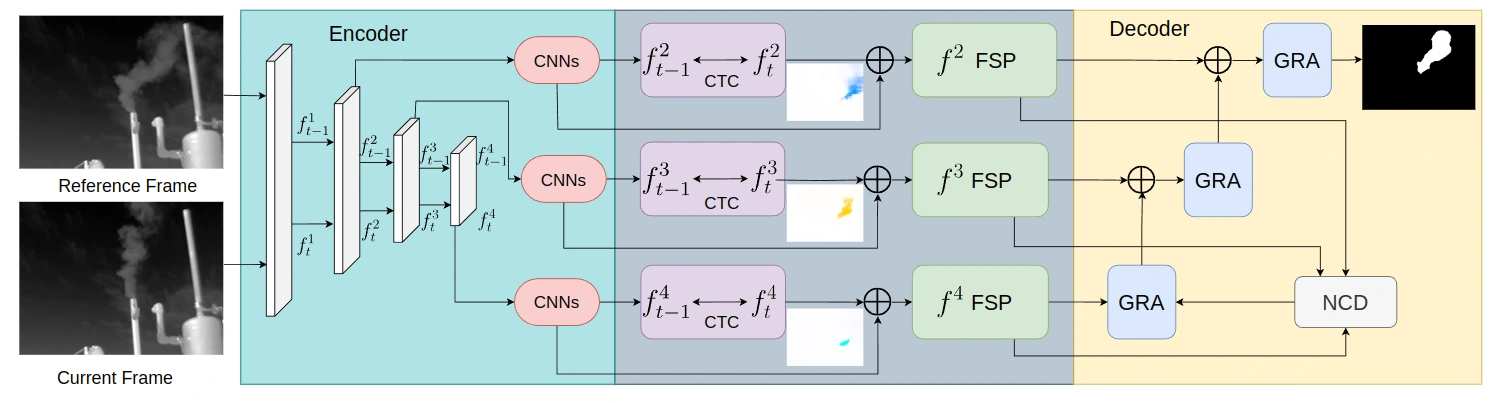
FGSTP framework overview supplied by the project author.
I. Overview
Gas leaks have weak texture, translucent boundaries, and highly variable motion. FGSTP combines temporal correspondence with local spatial detail so the model can follow plume movement without losing fine boundaries.
The work also introduces GasVid, a manually annotated video dataset created for evaluating gas-leak segmentation.
II. Key Contributions
- Builds a correlation volume across consecutive frames to expose motion cues from subtle plume movement.
- Refines spatial detail and boundaries through a dedicated fine-grained decoder.
- Introduces a manually labeled gas-leak video dataset for training and evaluation.
III. Methodology
FGSTP extracts features from adjacent frames, computes their correlation volume, and combines the resulting temporal evidence with spatial features. A boundary-aware decoder progressively refines the predicted gas mask.
IV. Main Findings
Experiments on GasVid show that combining motion correlation and spatial refinement improves segmentation accuracy, particularly around faint and irregular plume boundaries.
Reference
Citation
BibTeX citation
@INPROCEEDINGS{zhao_fgstp,
  author    = {Zhao, Xinlong and Du, Shan},
  title     = {Fine-Grained Spatial-Temporal Perception for Gas Leak Segmentation},
  booktitle = {2025 IEEE International Conference on Image Processing (ICIP)},
  year      = {2025},
  pages     = {869--874},
  doi       = {10.1109/ICIP55913.2025.11084304}
}
Continue exploring
Related Projects
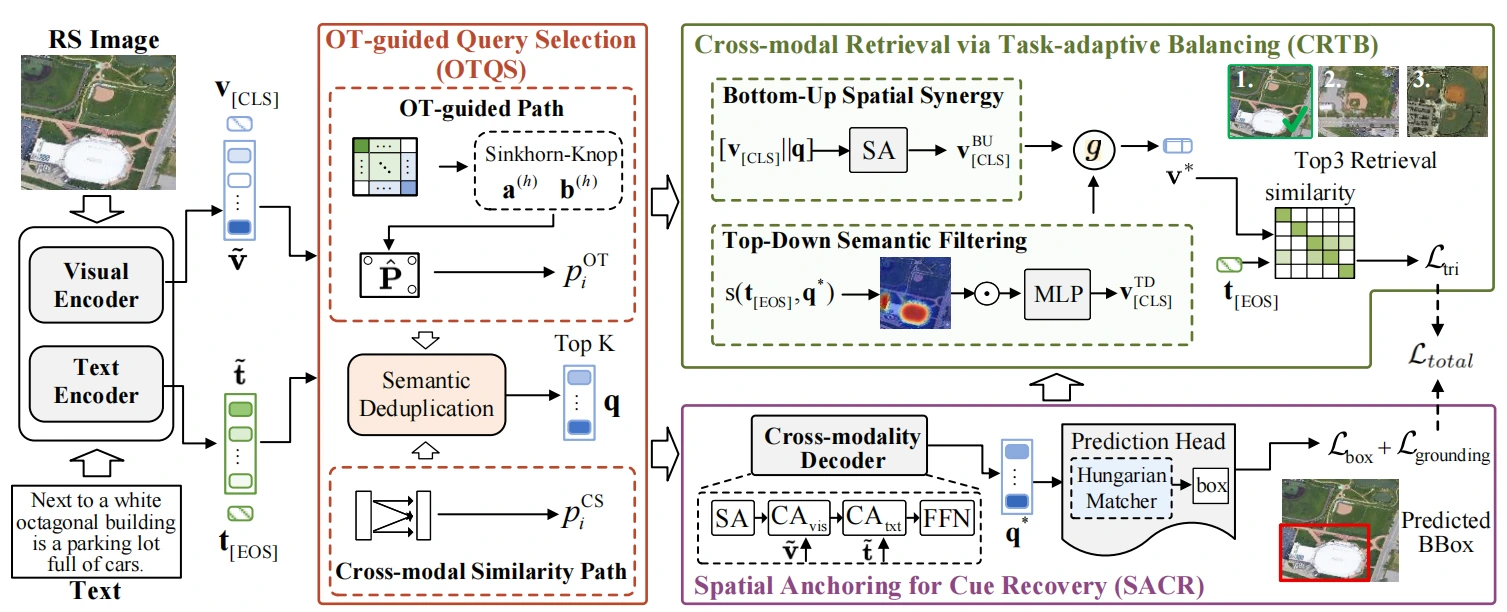
Explicit Spatial Localization and Task-Adaptive Balancing for Remote Sensing Image-Text Retrieval
A remote-sensing image–text retrieval framework that combines explicit object localization with adaptive coordination between spatial and semantic learning objectives.
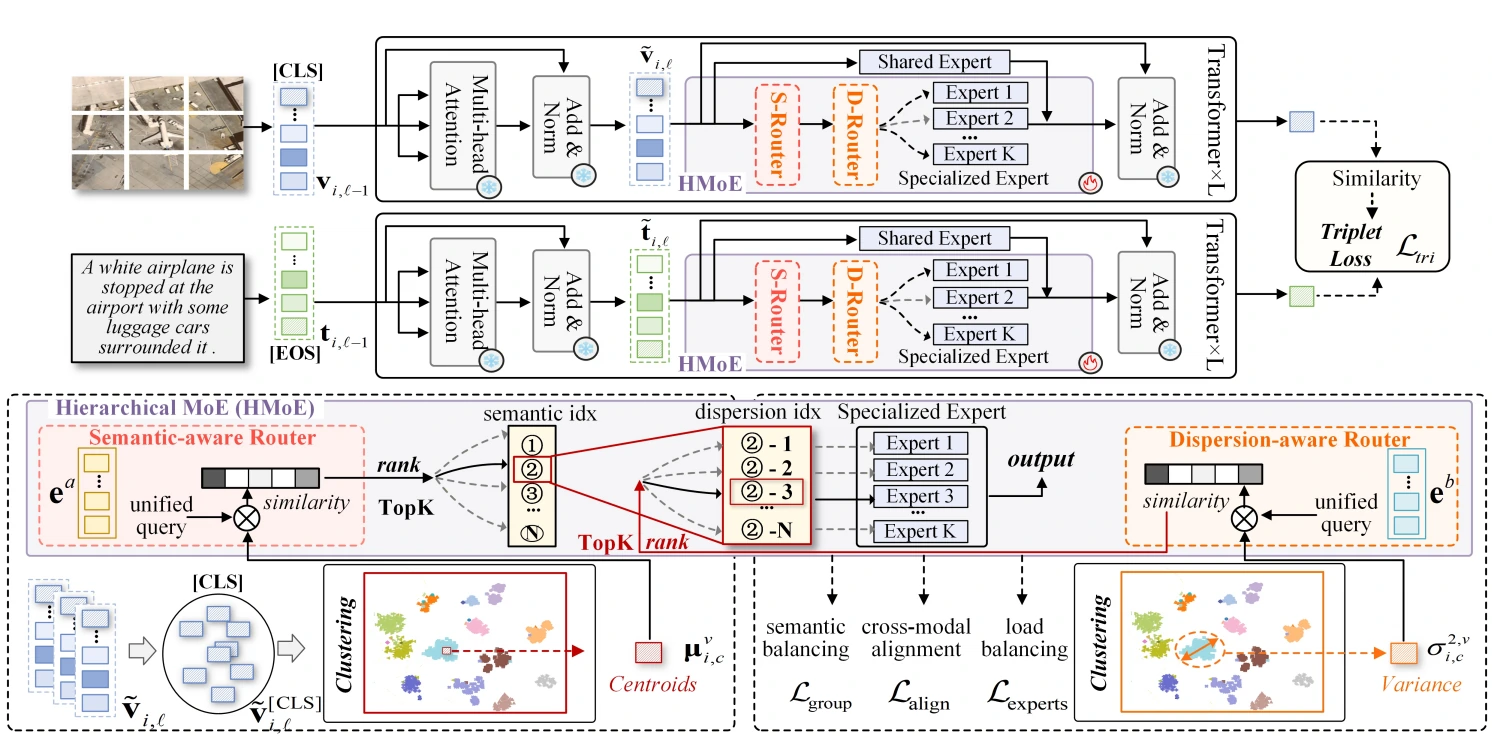
H-MoC: Hierarchical Mixture-of-Experts for Semantic- and Dispersion-Consistency in Remote Sensing Image-Text Retrieval
A hierarchical mixture-of-experts retrieval framework that promotes both semantic consistency and balanced feature dispersion across remote-sensing image and text representations.