
NEO-3DF: Novel Editing-Oriented 3D Face Creation and Reconstruction
Semantic part-based reconstruction with intuitive local shape editing
Proceedings of the Asian Conference on Computer Vision, 2022
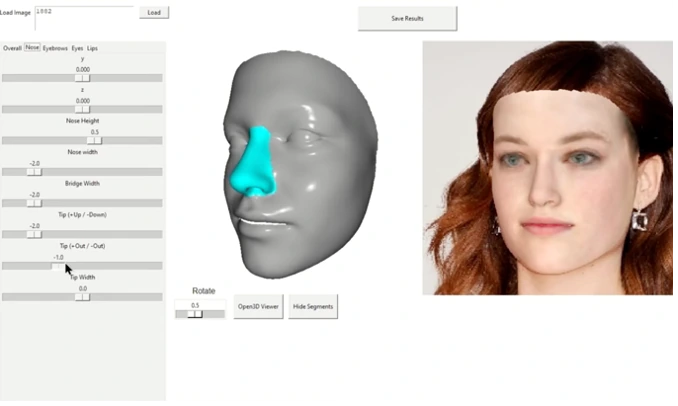
NEO-3DF reconstruction and editing overview supplied by the project author.
I. Overview
NEO-3DF treats reconstruction and editing as connected tasks. Its face model is divided into semantic parts, each with intuitive controls such as nose height, so users can adjust local shape after reconstructing a face from one image.
A differentiable blending module adjusts the shape and placement of the parts so the assembled 3D face aligns more closely with the original photograph.
II. Key Contributions
- Introduces independent semantic face-part submodels with local, interpretable editing controls.
- Uses differentiable part blending to improve both editing continuity and 3D-to-2D alignment.
- Connects face reconstruction and post-reconstruction editing in one optimization framework.
III. Methodology
Each semantic face region is represented by a controllable submodel. The part parameters can be edited independently, while a differentiable blender assembles the parts and optimizes their shapes and placements against the source image.
IV. Main Findings
The paper reports more intuitive local editing than prior global face models and a 14% improvement in 3D-to-2D alignment IoU.
V. Acknowledgements
The original project acknowledges support from the University of British Columbia Okanagan under grant GR017752.
Reference
Citation
BibTeX citation
@inproceedings{yan2022neo,
  title={Neo-3df: Novel editing-oriented 3d face creation and reconstruction},
  author={Yan, Peizhi and Gregson, James and Tang, Qiang and Ward, Rabab and Xu, Zhan and Du, Shan},
  booktitle={Asian Conference on Computer Vision},
  pages={72--88},
  year={2022},
  organization={Springer}
}
Continue exploring
Related Projects
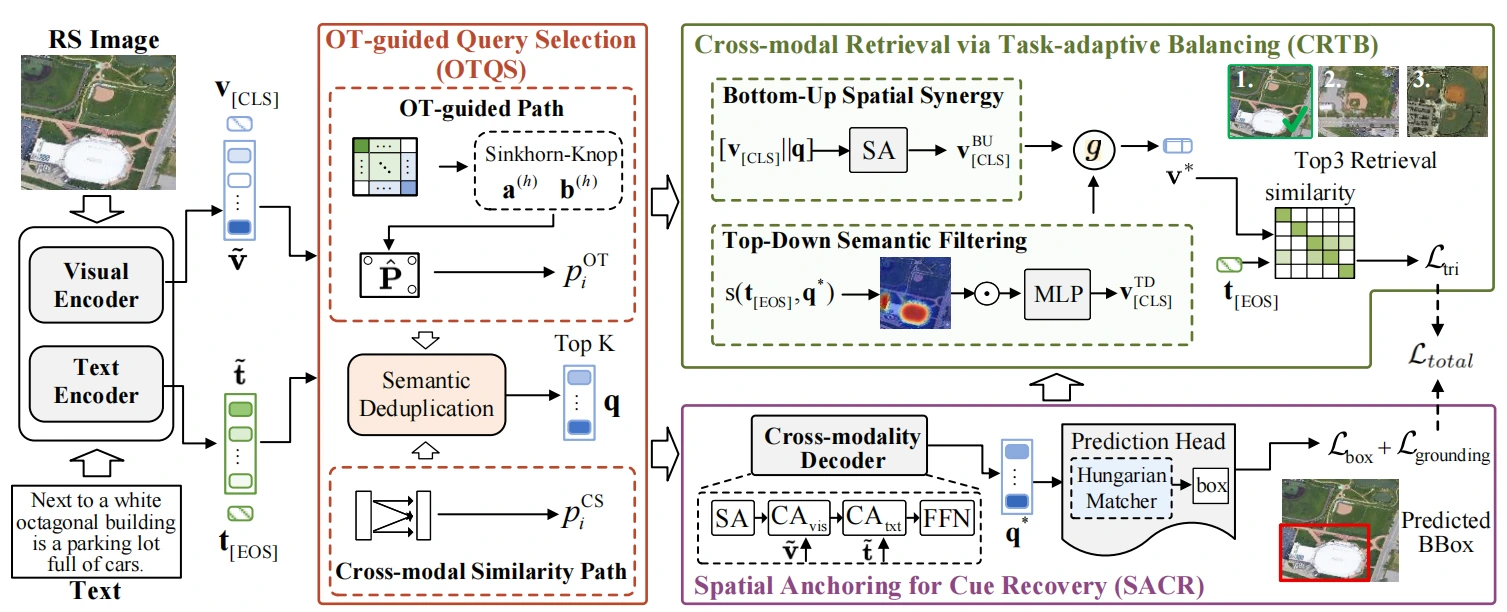
Explicit Spatial Localization and Task-Adaptive Balancing for Remote Sensing Image-Text Retrieval
A remote-sensing image–text retrieval framework that combines explicit object localization with adaptive coordination between spatial and semantic learning objectives.
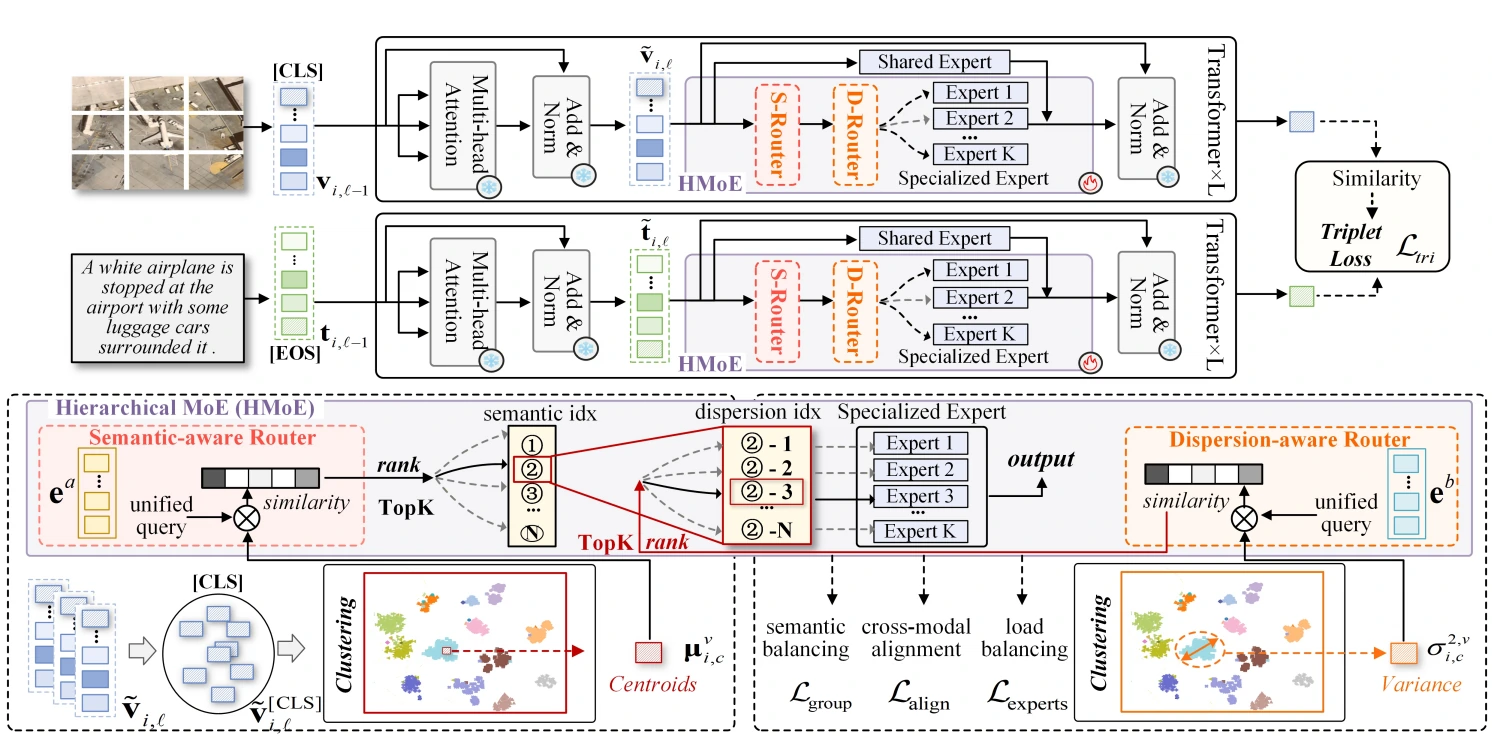
H-MoC: Hierarchical Mixture-of-Experts for Semantic- and Dispersion-Consistency in Remote Sensing Image-Text Retrieval
A hierarchical mixture-of-experts retrieval framework that promotes both semantic consistency and balanced feature dispersion across remote-sensing image and text representations.